
Seeing a yellow engine icon glow on your dashboard during a frosty November morning is frustrating. Many drivers assume a freezing engine block caused a major failure overnight. In reality, a cold-weather warning doesn’t automatically mean catastrophic engine damage, but you should never dismiss it as harmless. An experienced auto shop in Puyallup can scan the vehicle, identify the code, and determine whether the cause is a simple emissions seal or something that needs immediate repair.
Why Did My Check Engine Light Come on During the First Freezing Morning?
A check engine light can come on during the first freezing morning because cold temperatures affect seals, hoses, battery performance, and oil behavior. In some vehicles, an aging gas-cap seal that no longer seats properly can let fuel vapor escape and trigger an evaporative emissions warning.
The Winter Gas Cap Shrink Effect
The evaporative emission (EVAP) system in modern vehicles helps contain fuel vapors and prevent them from entering the atmosphere. A sharp overnight temperature drop can expose weaknesses in older rubber and plastic components. That environmental shift can create a recognizable sequence:
- Cold Seal Contraction: Freezing temperatures can stiffen the rubber gasket inside an aging gas cap, reducing its ability to seal tightly against the filler neck.
- Fuel Vapor Leakage: A poor seal can allow fuel vapor to escape the sealed EVAP system.
- EVAP Code Trigger: When the onboard computer runs its EVAP leak test, it detects the pressure change, stores an EVAP code, and illuminates the check engine light.
A loose, cracked, or poorly sealing gas cap is a common EVAP trigger, but it is not the only one. Cracked hoses, a faulty purge valve, or a damaged charcoal canister can produce similar warnings.
Why a Puyallup Auto Shop Must Verify Winter Codes
Drivers often respond to a winter EVAP code by buying a new gas cap. That may solve the problem, but replacing parts based on an internet search can waste money when the real leak is elsewhere. A professional diagnostic test separates a marginal gas-cap seal from a cracked vapor line, faulty valve, or charcoal-canister problem.
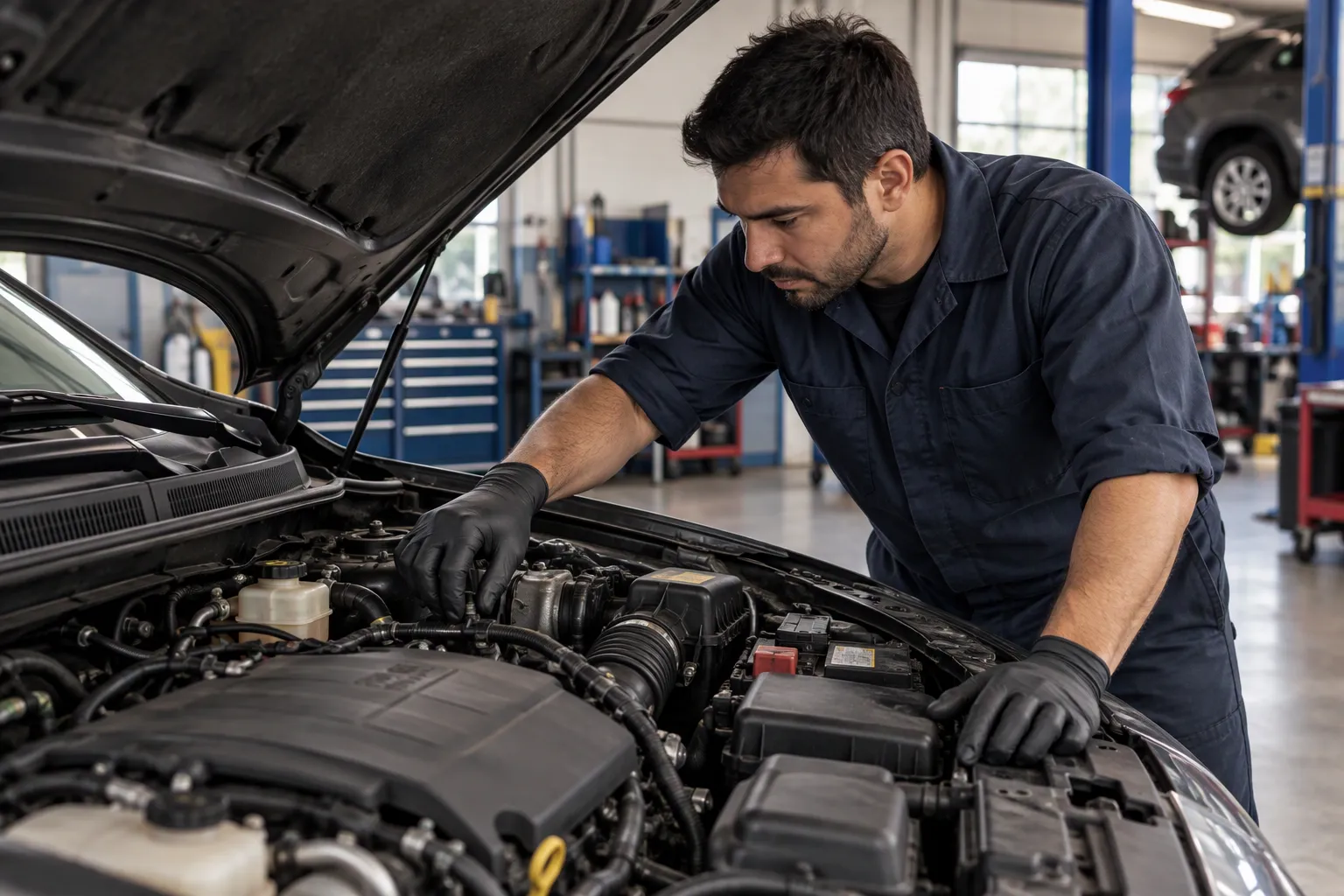
A technician connects a professional scanner to retrieve codes and review live data. If the gas cap checks out, the shop can introduce low-pressure smoke into the EVAP system. A visible wisp of smoke at a hose, seal, or valve identifies the exact leak point. Locating the source prevents unnecessary replacement of emission components that are still working properly.
Other Cold Weather Dashboard Triggers
A shrinking gas cap is not the only cold-weather reaction that can trigger a dashboard warning. Two other common winter conditions can cause the vehicle’s computer to store fault codes:
- Weak Battery Voltage Drops: Freezing temperatures reduce the cranking power of an aging lead-acid battery. A weak battery, corroded connection, or failing charging system can cause voltage drops that lead to communication or sensor-related codes.
- Cold Oil and Timing Faults: Thick, old, or low oil can delay variable valve timing operation during a cold start. If oil pressure or cam-phaser response falls outside expected parameters, the computer may store a timing-related code. A technician uses freeze-frame data to see whether the fault occurred during that cold-start period.
These codes deserve diagnosis, not automatic replacement of sensors or solenoids.
The Danger of Ignoring Dashboard Warnings
Drivers sometimes ignore a glowing dashboard icon during winter, hoping it disappears when temperatures rise. That approach creates financial risk. A light caused by a loose gas cap may look identical to one caused by an active engine misfire, and continued driving with a flashing check engine light can damage the catalytic converter.
Scheduling a diagnostic check at a trusted auto repair shop in Puyallup removes the guesswork from winter driving. A proper inspection separates environmental quirks from electrical, emissions, or mechanical failures. Catching a minor issue early keeps the vehicle dependable through cold Pacific Northwest mornings and prevents a small repair from becoming a major one.
Related Articles:
- What to Do When Your Check Engine Light Is On in Puyallup
- Check Engine Light On in Tacoma? Why Fast Diagnostics Matter
Clear Your Dashboard Before Winter Commutes
Staring at a glowing check engine light on a dark winter commute creates unnecessary stress. A professional scan translates that vague dashboard warning into a clear mechanical plan. Goods Automotive performs the physical testing required to separate harmless weather quirks from real engine failures.
Stop throwing parts at a dashboard light. Contact us today to get the right answers from a trusted auto shop in Puyallup.