
Lakewood drivers spend hundreds of dollars on specialized rubber to survive icy morning commutes and freezing rain. Throwing fresh tires onto a crooked suspension wastes that money instantly. A proper auto wheel alignment right after mounting new tires protects them from rapid wear. Fixing your suspension geometry now ensures those expensive tires actually survive the season.
Do I Really Need an Alignment When I Buy New Winter Tires?
You absolutely need this service. Installing soft winter tires on a misaligned vehicle causes severe sideways tread scrub, wearing down expensive rubber compounds in just a few weeks of daily driving. Three mechanical realities explain exactly why this happens, and why fixing your suspension geometry is non-negotiable:
Soft Rubber Wear Vulnerability
Winter tires use softer, highly flexible rubber compounds formulated to remain pliable in sub-freezing temperatures. Because this rubber compound is significantly softer than standard summer or all-season tread, misaligned suspension angles accelerate uneven wear far faster.
Sideways Scrubbing Friction
When toe or camber settings drift outside factory specifications, the tires cannot roll straight forward. Instead, the suspension forces the vehicle to drag the tires slightly sideways down the road, creating constant lateral scrubbing friction that shreds specialized sipes and traction blocks.
Investment Protection
Performing a 4-wheel alignment at the time of winter tire mounting ensures even contact across the entire tread. Proper suspension alignment protects your tire investment, maintains predictable emergency braking on wet pavement, and preserves winter tread depth across multiple seasons.
The Winter Tire Alignment Protocol
To prevent rapid tire destruction, seasoned mechanics follow a strict procedure involving four critical steps to establish a straight mechanical baseline:
- Baseline Digital Measurement: Technicians attach sensors to all four wheels to measure current camber and toe angles, then check caster by sweeping the steering. This diagnostic step reveals how far the suspension has drifted from factory specifications. Mechanics rely on this hard data rather than visual guessing.
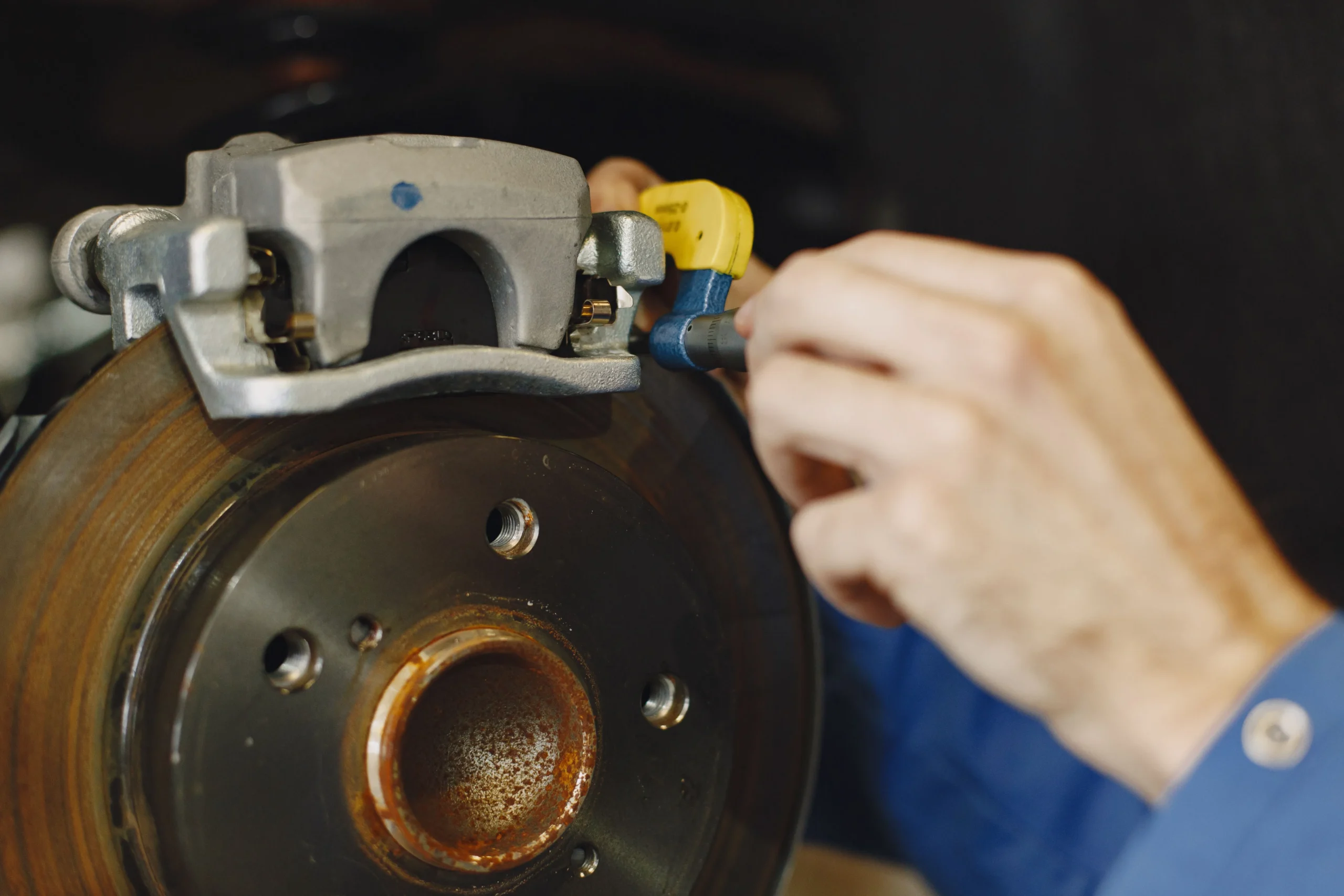
- Suspension Hardware Inspection: A crooked wheel often points to worn internal parts. Mechanics physically inspect the tie rods, ball joints, and control arm bushings for damage before turning any wrenches. Adjusting a vehicle with worn suspension hardware won’t hold reliably and is unsafe.
- Physical Angle Correction: Using precision tools, technicians turn the mechanical adjustment bolts hidden under the vehicle. This action brings the wheels back into a parallel stance so they point straight down the road without fighting each other.
- Steering Wheel Centering: Finally, the technician locks the steering wheel dead center while finalizing the mechanical adjustments. This critical step ensures the vehicle tracks straight when your hands are resting level on the wheel.
How Lakewood Potholes Sabotage Your Steering Geometry
Suspension misalignment rarely happens overnight. Every time you hit a parking block or drop into a deep pothole along South Tacoma Way, the metal components under your car bend slightly. Over several months, these impacts push your steering parts out of their intended positions. This gradual shift forces the wheels out of parallel alignment long before the snow falls.
You might not feel this friction through the steering wheel while driving. A vehicle tracking straight down Interstate 5 can still scrub and wear unevenly if the internal toe angle is incorrect. The vehicle’s weight presses down on the misaligned wheels, grinding the outer edges of your fresh tread down much faster, potentially to the cords. Catching these shifted angles early with a routine car wheel alignment stops the mechanical dragging process entirely.
Related Articles:
- Signs You Need an Auto Wheel Alignment After Hitting Potholes
- Steering Wheel Shaking? Why You Need Auto Wheel Alignment
Stop Driving on a Crooked Suspension
Driving on fresh rubber with a crooked suspension is a terrible financial strategy. Hidden potholes along South Tacoma Way knock your steering angles out of place constantly during the summer months. Fixing those angles helps guarantee your vehicle handles predictably on slick neighborhood streets when the weather turns bad. Proper maintenance saves you from sliding through icy intersections.
Goods Automotive provides the hands-on diagnostic testing required to keep your suspension geometry straight. Our ASE-certified technicians measure your current angles and adjust the steering components to protect your fresh rubber.
Contact us to schedule a dependable auto wheel alignment today to maximize your winter traction and keep your vehicle safe. We ensure your tires perform properly on icy roads.